| Mild signs | Possible below 0.25 g of pure alcohol per kg, especially in small dogs |
|---|---|
| Severely drunk | Around 1 g per kg: wobbling, low blood sugar, low body temperature |
| Lethal dose | 5.5 to 7.9 g per kg published |
| Hidden sources | Raw bread dough, rotten fruit, mouthwash, vanilla extract, hand sanitizer |
| What to do | See a vet now; keep your dog warm on the way |
How to use the dog alcohol toxicity calculator
- Enter your dog’s weight.
- Choose the drink or product, such as beer, wine, a cream liqueur, spirits, mouthwash, vanilla extract or hand sanitizer.
- Enter how much is missing in mL, fluid ounces, cans, glasses or shots.
- Read the dose of pure alcohol in g/kg and the risk level.
How much alcohol is toxic to dogs (chart by weight)
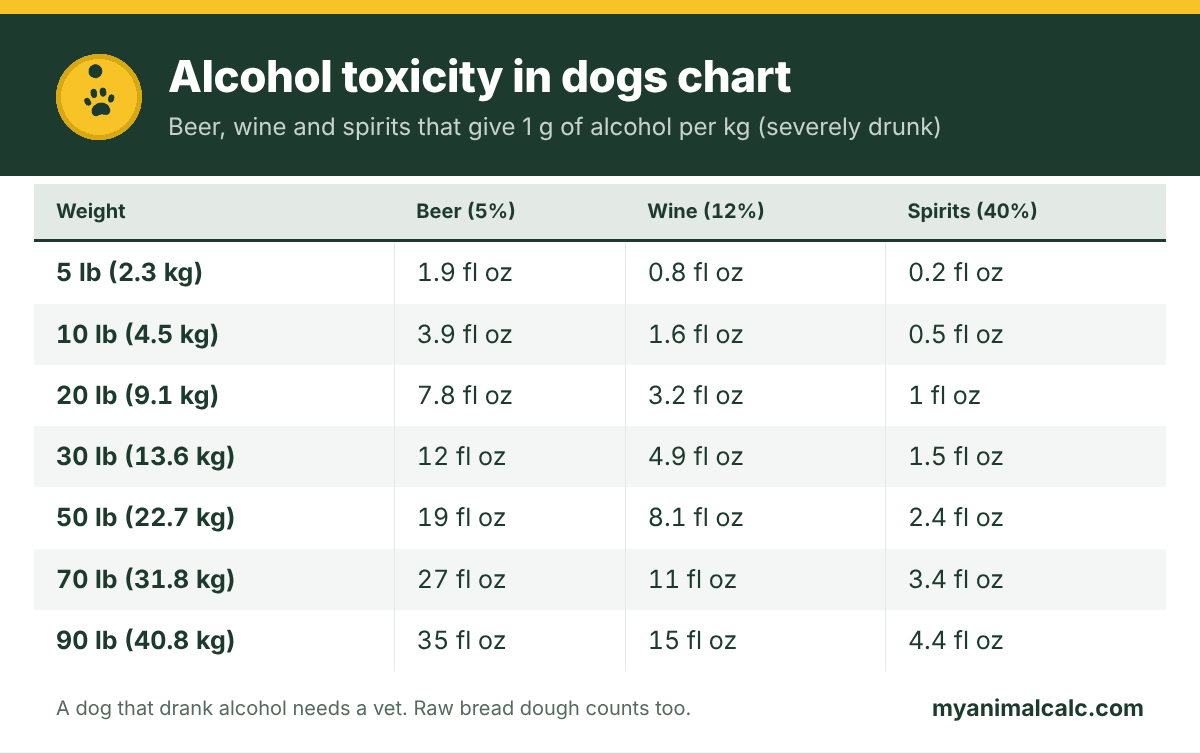
The amounts that give 1 g of pure alcohol per kg, where a dog is likely to be severely drunk and needs a vet.
| Weight | Beer (5%) | Wine (12%) | Spirits (40%) |
|---|---|---|---|
| 5 lb (2.3 kg) | 1.9 fl oz | 0.8 fl oz | 0.2 fl oz |
| 10 lb (4.5 kg) | 3.9 fl oz | 1.6 fl oz | 0.5 fl oz |
| 20 lb (9.1 kg) | 7.8 fl oz | 3.2 fl oz | 1 fl oz |
| 30 lb (13.6 kg) | 12 fl oz | 4.9 fl oz | 1.5 fl oz |
| 50 lb (22.7 kg) | 19 fl oz | 8.1 fl oz | 2.4 fl oz |
| 70 lb (31.8 kg) | 27 fl oz | 11 fl oz | 3.4 fl oz |
| 90 lb (40.8 kg) | 35 fl oz | 15 fl oz | 4.4 fl oz |
For a small dog, a few sips of a cocktail or half a glass of wine can be dangerous. Creamy drinks such as eggnog, cream liqueurs and white Russians are especially tempting to dogs. Coffee liqueurs and Irish coffee add caffeine too, so also check the dog caffeine toxicity calculator.
How much alcohol is in common household products?
| Product | Alcohol by volume |
|---|---|
| Light beer | 2.5 to 3.5% |
| Beer, cider, hard seltzer | 4 to 6% |
| Wine | 10 to 20% |
| Cream liqueurs and fortified wine | 15 to 20% |
| Mouthwash | up to about 27% |
| Vanilla extract | at least 35% |
| Vodka, whisky, rum, gin | 40% or more |
| Hand sanitizer | 60 to 95% (ethanol or isopropyl) |
Raw bread dough, rotten fruit and other hidden sources
Raw yeast dough is a double danger. The warm stomach makes it rise, which can stretch the stomach painfully, and the yeast produces alcohol as it ferments. Any dog that ate raw dough needs a vet, however small the amount looks. Fallen, fermenting apples and other fruit have caused alcohol poisoning in dogs too, as have alcohol-filled chocolates and liquid medicines.
Not all alcohols are the same. Rubbing alcohol and many sanitizers contain isopropanol, which is about twice as toxic as drinking alcohol; the calculator counts it double. Windshield washer fluid contains methanol, and antifreeze contains ethylene glycol, which is far more dangerous than any drink: get your dog to a vet immediately if it licked antifreeze.
Symptoms of alcohol toxicity in dogs
Signs usually begin 30 to 60 minutes after drinking: vomiting, drooling, wobbling, confusion, sleepiness, and the smell of alcohol on the breath. In severe cases the dog’s temperature and blood sugar fall, breathing slows, and it may collapse, have seizures or go into a coma. A drunk dog that vomits can also inhale it.
What to do if your dog drank alcohol
Call your vet or a poison line straight away. Alcohol is absorbed so quickly that making a dog vomit only helps in the first 20 to 40 minutes, before signs appear, and only on a vet’s advice (see hydrogen peroxide dosage for dogs). Activated charcoal does not bind alcohol well, so treatment is mostly supportive: warming, intravenous fluids, sugar for low blood sugar, and breathing support for very drowsy dogs. Keep a drunk dog warm and away from stairs and water on the way. Most dogs recover within 12 to 24 hours.
Printable alcohol toxicity in dogs chart
The chart above as an image, to save on your phone or print. Use the calculator at the top of the page for your own dog.
Coffee liqueurs and Irish coffee also contain caffeine: see the caffeine toxicity calculator. Chocolate liqueurs and cakes may need the chocolate toxicity calculator as well.
Alcohol toxicity in dogs FAQs
Can dogs get drunk?
Yes, and much faster than people. A small dog can become drunk from a few ounces of beer. Unlike people, dogs also become dangerously cold and low in blood sugar.
How much beer can kill a dog?
The published lethal dose is 5.5 to 7.9 g of pure alcohol per kg. For a 20 lb dog, that is about 4 to 5 cans of 5% beer, but serious problems start well before that. Treat any dog that drank more than a few sips as needing a vet.
My dog licked a little wine. Is it OK?
A lick or two is unlikely to cause harm in a medium or large dog. Watch for wobbling or vomiting over the next hour, and call your vet if you see any signs or if your dog is very small.
How long does alcohol stay in a dog’s system?
Signs usually start within an hour, and most dogs recover in 12 to 24 hours with treatment. Large doses can take longer.
Is hand sanitizer toxic to dogs?
Licking sanitizer off your hands is harmless. Drinking it from the bottle is not: sanitizers are 60 to 95% alcohol, and isopropyl versions are about twice as toxic as drinking alcohol.
Is “beer for dogs” safe?
Products sold as dog beer are alcohol-free broths and are safe. Never give a dog real beer, including non-alcoholic beer, which can still contain a little alcohol and hops.
How much alcohol is toxic to dogs?
Even small amounts below 0.25 g of pure alcohol per kg can cause wobbliness or vomiting; around 1 g/kg a dog is likely to be very drunk, with low blood sugar and low body temperature; and 5.5 to 7.9 g/kg has killed dogs. For a 30 lb dog, 1 g/kg is about 12 fl oz of beer, 5 fl oz of wine or 1.5 fl oz of spirits.