| Lethal dose | 4.4 to 6.6 mL/kg of undiluted ethylene glycol |
|---|---|
| Concentrated antifreeze | Up to 95% ethylene glycol |
| Pre-mixed coolant | About 50% ethylene glycol |
| Early signs | Like being drunk, within 30 minutes to 12 hours |
| Kidney failure | 36 to 72 hours after drinking |
| What to do | Go to a vet now; don’t wait for signs |
How to use the dog antifreeze toxicity calculator
- Enter your dog’s weight.
- Enter how much it may have drunk, in mL, teaspoons, tablespoons, fluid ounces or cups. If you don’t know, use the most that could be missing.
- Choose the product: concentrated antifreeze, pre-mixed 50/50 coolant, or not sure.
- Read the dose in mL/kg, and go to the vet whatever the result.
How much antifreeze can kill a dog (chart by weight)
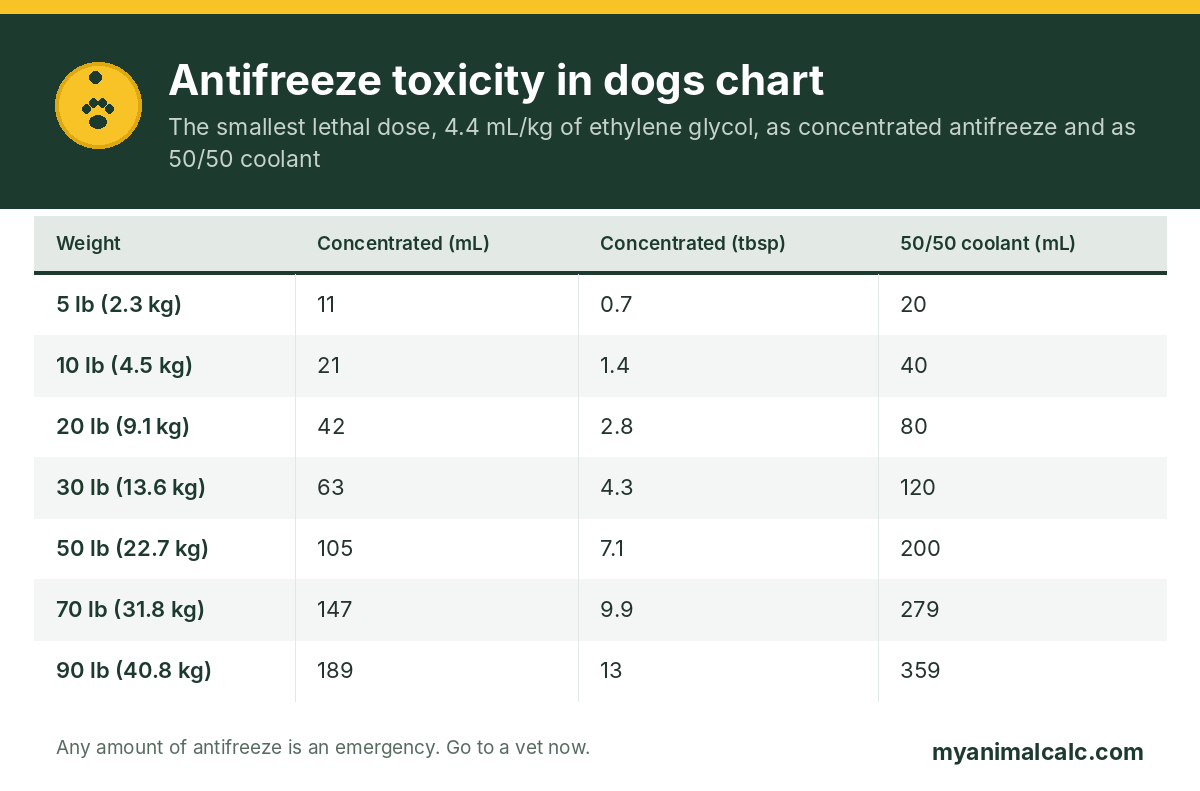
The smallest lethal dose (4.4 mL/kg of ethylene glycol) as concentrated antifreeze, in mL and tablespoons, and as pre-mixed 50/50 coolant.
| Dog’s weight | Concentrated (mL) | Concentrated (tbsp) | 50/50 coolant (mL) |
|---|---|---|---|
| 5 lb (2.3 kg) | 11 | 0.7 | 20 |
| 10 lb (4.5 kg) | 21 | 1.4 | 40 |
| 20 lb (9.1 kg) | 42 | 2.8 | 80 |
| 30 lb (13.6 kg) | 63 | 4.3 | 120 |
| 50 lb (22.7 kg) | 105 | 7.1 | 200 |
| 70 lb (31.8 kg) | 147 | 9.9 | 279 |
| 90 lb (40.8 kg) | 189 | 13 | 359 |
These are the smallest amounts known to kill. Any amount at all needs a vet, because treatment must start before the poison is turned into its toxic products.
Why antifreeze is so dangerous
Ethylene glycol is absorbed within one to four hours. The liver turns it into glycolic acid and oxalate, which make the blood acidic and form calcium oxalate crystals in the kidneys, causing kidney failure. The antidotes, fomepizole or ethanol given by a vet, stop that conversion, so they only help while unchanged ethylene glycol is still in the body. Since 2012 US antifreeze has a bittering agent, but dogs still drink it.
Symptoms of antifreeze poisoning in dogs
From 30 minutes to 12 hours after drinking, a dog looks drunk: wobbly, sleepy, vomiting, drinking and peeing a lot. It may then seem to recover around 12 hours, which is misleading. In dogs, kidney failure follows 36 to 72 hours after drinking, with no appetite, vomiting, mouth ulcers, painful kidneys, little or no urine, seizures and coma. By then the outlook is poor.
What to do if your dog drank antifreeze
Go to the nearest vet or emergency clinic now and call ahead; don’t wait for signs. Bring the container. You can also call ASPCA (888) 426-4435 or Pet Poison Helpline (855) 764-7661 (a fee may apply). Vets can run a quick blood test for ethylene glycol, give the antidote, and use intravenous fluids. Do not make your dog vomit unless a vet tells you to. Clean up spills and store coolant tightly closed and out of reach.
Printable dog antifreeze toxicity chart
The chart above as an image, to save on your phone or print. Use the calculator at the top of the page for your own dog.
See also the dog alcohol toxicity calculator, the dog xylitol toxicity calculator and, for kidney results after poisoning, the dog kidney disease stage calculator.
Dog antifreeze toxicity FAQs
How much antifreeze will kill a dog?
The smallest lethal dose of undiluted ethylene glycol in dogs is 4.4 to 6.6 mL per kg. For a 20 lb (9 kg) dog that is about 42 mL of concentrated antifreeze, under 3 tablespoons.
How long does antifreeze take to affect a dog?
Drunk-like signs can start within 30 minutes. Kidney failure follows 36 to 72 hours later if the dog is not treated in time.
Can a dog survive antifreeze poisoning?
Yes, if the antidote is given early, ideally within hours. Once the kidneys are failing, survival is much less likely.
Is pet-safe antifreeze really safe?
Propylene glycol antifreeze is much less toxic than ethylene glycol, but it is not harmless. Call your vet if your dog drank any.