| First dose | 2 weeks old |
|---|---|
| Then | Every 2 weeks to 8 weeks, then monthly to 6 months |
| Heartworm prevention | Start no later than 8 weeks, monthly for life |
| Fecal tests | At least 4 in the first year |
| New puppy, history unknown | Deworm on arrival and 2 weeks later, then monthly |
How to use the puppy deworming schedule calculator
- Enter your puppy’s date of birth.
- Say whether it has been dewormed on schedule, or has just come home with an unknown history.
- If it is new, enter the date it came home.
- Read the schedule: each deworming with its date, the next one due, and the heartworm and fecal test plan.
Puppy deworming schedule chart
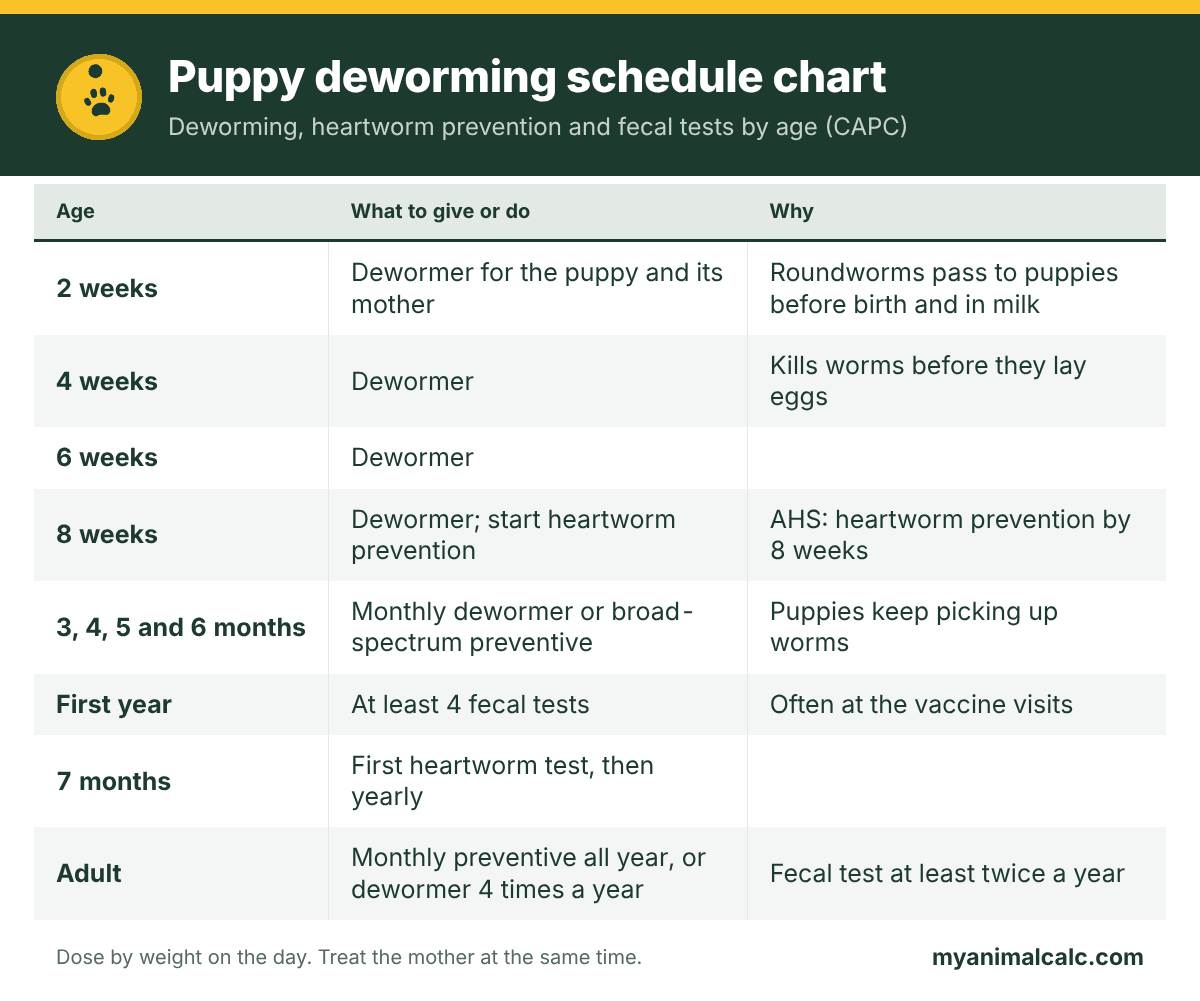
The CAPC schedule for puppies, with heartworm prevention from the American Heartworm Society.
| Age | What to give or do | Why |
|---|---|---|
| 2 weeks | Dewormer for the puppy and its mother | Roundworms pass to puppies before birth and in milk |
| 4 weeks | Dewormer | Kills worms before they lay eggs |
| 6 weeks | Dewormer | |
| 8 weeks | Dewormer; start heartworm prevention | AHS: heartworm prevention by 8 weeks |
| 3, 4, 5 and 6 months | Monthly dewormer or broad-spectrum preventive | Puppies keep picking up worms |
| First year | At least 4 fecal tests | Often at the vaccine visits |
| 7 months | First heartworm test, then yearly | |
| Adult | Monthly preventive all year, or dewormer 4 times a year | Fecal test at least twice a year |
Many monthly heartworm preventives also treat roundworms and hookworms, so once your puppy is on one, its monthly dose covers the deworming too. Your vet will choose the product.
Why puppies are dewormed so often
Roundworm larvae lie dormant in the mother’s tissues and wake up during pregnancy, so puppies are infected before birth and through the milk. Worms in a puppy start laying eggs from about 3 weeks of age, and the eggs survive in soil for years. Dewormers kill the worms in the gut but not larvae still migrating through the body, so treating every 2 weeks catches each new wave before it can lay eggs. Roundworms and hookworms can also infect people, especially children.
Deworming a new puppy
If you don’t know whether your puppy has been dewormed, give a dose when it comes home and another 2 weeks later; some vets give a third 2 weeks after that. Then deworm monthly until 6 months. Take a fresh stool sample to your first vet visit for a fecal test. Dose every dewormer by your puppy’s weight on the day, because puppies can double their weight in a month; you can check a common dose with the fenbendazole dosage calculator.
Heartworm prevention for puppies
Heartworm is spread by mosquitoes, and puppies are at the same risk as adult dogs. The American Heartworm Society advises starting a preventive as early as the product label allows and no later than 8 weeks, given monthly for life. Puppies under 7 months can start without a test. Test yearly from about 7 months; if prevention started after 8 weeks, test 6 months after the first dose and again 6 months later.
Deworming after 6 months
CAPC advises year-round broad-spectrum parasite control for adult dogs, which most owners give as a monthly heartworm preventive that also treats intestinal worms. If your dog is not on one, deworm four times a year. Either way, take a stool sample for a fecal test at least twice a year, more often for dogs that hunt, eat raw food or mix with many other dogs.
Printable puppy deworming schedule chart
The chart above as an image, to save on your phone or print for the fridge. Use the calculator at the top of the page for your own dog.
Line the visits up with the puppy vaccination schedule calculator, and if you see worms in your puppy’s poop, check the dog poop color calculator.
Puppy deworming schedule FAQs
When should puppies be dewormed?
At 2, 4, 6 and 8 weeks of age, then monthly until 6 months, following the CAPC guidelines. Treat the mother at the same time as the young puppies.
How often do you deworm a puppy?
Every 2 weeks from 2 to 8 weeks, then once a month until 6 months of age. After that, a monthly broad-spectrum preventive or a dewormer four times a year.
Can I deworm my puppy at home?
Yes, with a dewormer your vet recommends, dosed by your puppy’s weight on the day. Your vet can also check a stool sample to make sure the treatment is working.
What if I just got a puppy and don’t know if it was dewormed?
Deworm it when it comes home and again 2 weeks later, then monthly until 6 months. Take a stool sample to your first vet visit.
When should a puppy start heartworm prevention?
As early as the product label allows and no later than 8 weeks of age, then every month for life, according to the American Heartworm Society.
What are the signs of worms in puppies?
A pot belly, diarrhea, poor growth, a dull coat, coughing, and worms or rice-like segments in the poop or vomit. Many puppies show no signs at all, which is why routine deworming matters.
Sources
- Companion Animal Parasite Council: General guidelines
- Pets and Parasites (CAPC): Guidelines for pet owners
- Companion Animal Parasite Council: Ascarid (roundworm) guidelines
- American Heartworm Society: Puppies and kittens need protection too (PDF)
- Canadian Parasitology Expert Panel: Parasite guidelines for dogs and cats