| Normal | Under 140 mm Hg systolic |
|---|---|
| Prehypertensive | 140 to 159 mm Hg |
| Hypertensive | 160 to 179 mm Hg |
| Severely hypertensive | 180 mm Hg or more |
| How to measure | Settle 5 to 10 minutes, drop the first reading, average 5 to 7 |
| Who to screen | Dogs 9 years or older, and dogs with kidney disease, Cushing’s or diabetes |
How to use the dog blood pressure calculator
- Type the systolic readings in the order they were taken, separated by commas. The first one is dropped.
- Choose your dog’s breed group; sighthounds normally read higher.
- Tick any signs or conditions, such as sudden blindness or kidney disease.
- Read the average and the ACVIM category, and take the numbers to your vet.
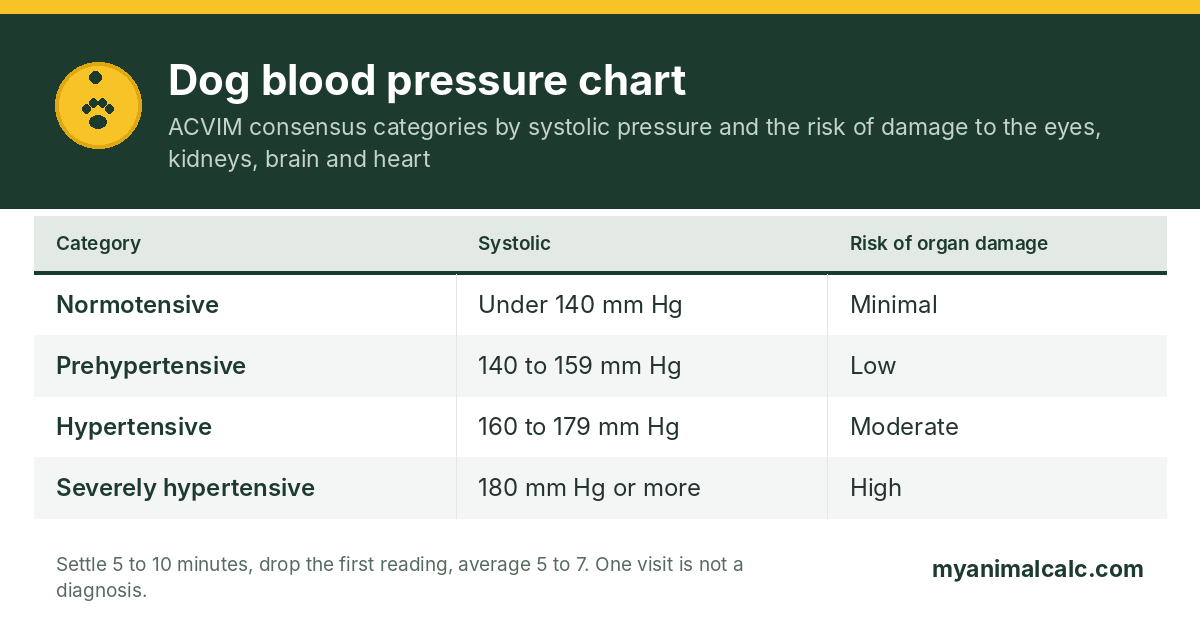
Dog blood pressure chart (ACVIM categories)
The ACVIM consensus categories, based on systolic pressure and the risk of damage to the eyes, kidneys, brain and heart (target organ damage).
| Category | Systolic pressure | Risk of organ damage |
|---|---|---|
| Normotensive | Under 140 mm Hg | Minimal |
| Prehypertensive | 140 to 159 mm Hg | Low |
| Hypertensive | 160 to 179 mm Hg | Moderate |
| Severely hypertensive | 180 mm Hg or more | High |
The same cut-offs apply to cats. One high reading is not a diagnosis; vets confirm it on separate visits unless there are signs of damage.
How vets measure blood pressure in dogs
Dogs are measured awake, with a Doppler or oscillometric device and a cuff on a leg or the tail. The ACVIM protocol is to let the dog settle in a quiet room for 5 to 10 minutes with the owner, use a cuff about 30 to 40% of the limb’s circumference, discard the first reading and average 5 to 7 steady ones. Stress at the clinic can push readings up, so a high result is usually rechecked.
What causes high blood pressure in dogs
Most high blood pressure in dogs is secondary to another disease, especially kidney disease, Cushing’s disease, diabetes and some hormone tumors, or to medicines. That is why the ACVIM panel suggests annual checks from 9 years old and in dogs with those conditions. Sighthounds such as Greyhounds normally read about 10 to 20 mm Hg higher than other dogs.
Signs of organ damage from high blood pressure
High pressure can detach the retina or cause bleeding in the eye, leading to sudden blindness; cause seizures, confusion or a head tilt; speed up kidney damage and protein loss in the urine; and thicken the heart muscle. With signs like these, ACVIM advises treating without waiting for repeat visits. Vets usually start with an ACE inhibitor or telmisartan, adding amlodipine if needed.
Printable dog blood pressure chart
The chart above as an image, to save on your phone or print. Use the calculator at the top of the page for your own dog.
Medicines for high blood pressure: the enalapril dosage for dogs calculator, the benazepril dosage for dogs calculator and the amlodipine dosage for dogs calculator. Check kidneys with the dog kidney disease stage calculator.
Dog blood pressure FAQs
What is normal blood pressure for a dog?
A systolic pressure under 140 mm Hg is normal (normotensive) in the ACVIM consensus. Healthy dogs measured awake often read between about 130 and 150.
What blood pressure is too high for a dog?
160 mm Hg or more is hypertensive and 180 or more is severely hypertensive, with a moderate and high risk of organ damage.
Why was my dog’s blood pressure high at the vet?
Stress and excitement can raise it, the so-called white coat effect. That is why vets let dogs settle, drop the first reading and recheck on another day.
Can I check my dog’s blood pressure at home?
No device has yet met full validation standards in awake dogs, and human home monitors are not made for them. Ask your vet how to measure and what cuff size to use.