| Ideal score | 4 or 5 out of 9 |
|---|---|
| Overweight | 6 or 7 out of 9 |
| Obese | 8 or 9 out of 9 |
| Each point above 5 | About 10 to 15% over ideal weight |
| Example | A 60 lb dog with a score of 7: ideal about 46 to 50 lb |
How to use the dog BMI calculator
- Enter your dog’s weight from a scale, in pounds or kilograms.
- Feel the ribs: run your flat hands along the chest. You should feel each rib under a thin layer of fat without pressing.
- Look from above and from the side for a waist behind the ribs and a belly that tucks up toward the hind legs.
- Pick the description that fits best and read the score, the percentage over ideal and the ideal weight range.
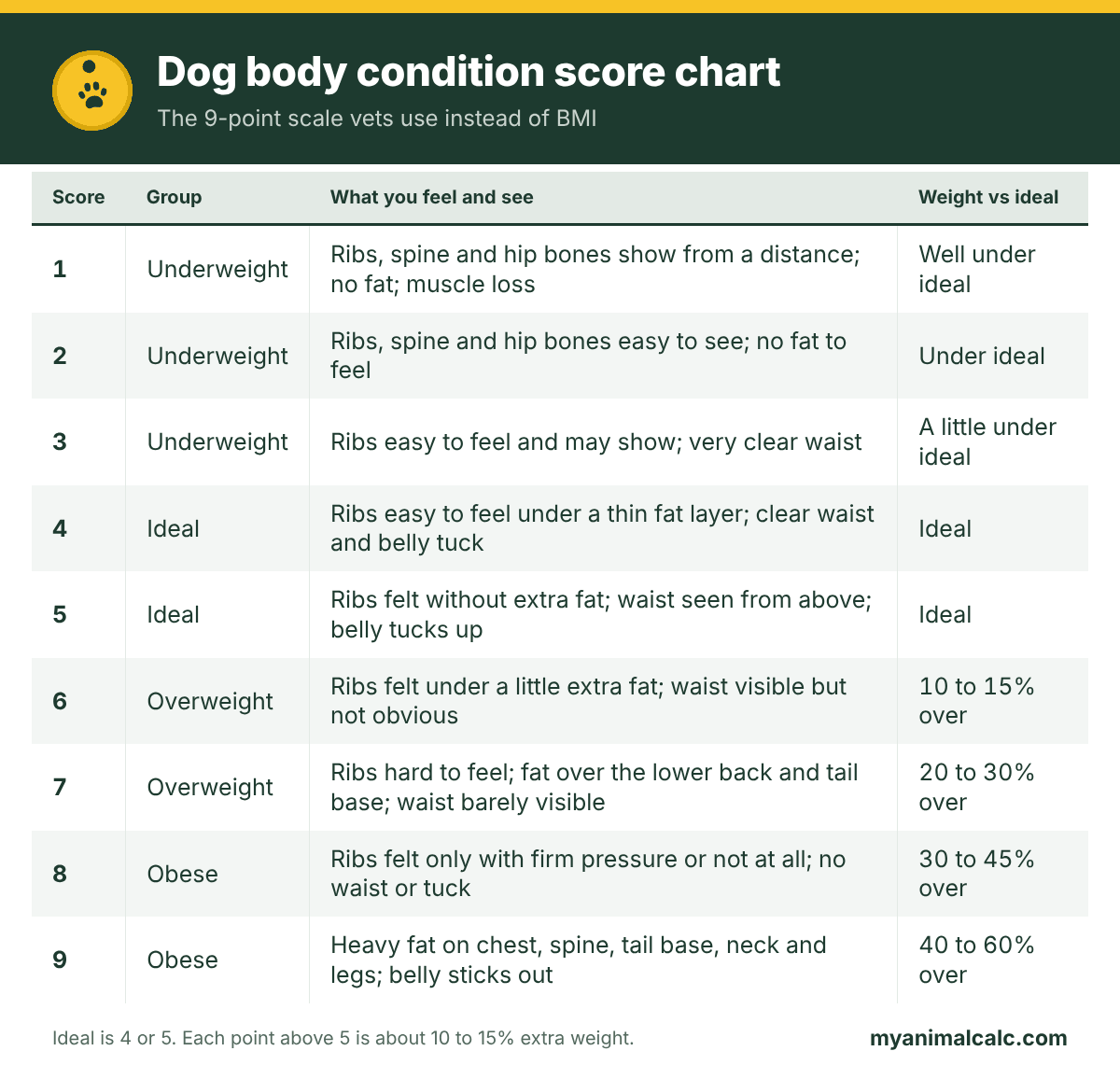
Dog body condition score chart
The 9-point scale used by the WSAVA and in the Purina Body Condition System. The last column shows how far each score is from ideal weight.
| Score | Group | What you feel and see | Weight vs ideal |
|---|---|---|---|
| 1 | Underweight | Ribs, spine and hip bones show from a distance; no fat; muscle loss | Well under ideal |
| 2 | Underweight | Ribs, spine and hip bones easy to see; no fat to feel | Under ideal |
| 3 | Underweight | Ribs easy to feel and may show; very clear waist | A little under ideal |
| 4 | Ideal | Ribs easy to feel under a thin fat layer; clear waist and belly tuck | Ideal |
| 5 | Ideal | Ribs felt without extra fat; waist seen from above; belly tucks up | Ideal |
| 6 | Overweight | Ribs felt under a little extra fat; waist visible but not obvious | 10 to 15% over |
| 7 | Overweight | Ribs hard to feel; fat over the lower back and tail base; waist barely visible | 20 to 30% over |
| 8 | Obese | Ribs felt only with firm pressure or not at all; no waist or tuck | 30 to 45% over |
| 9 | Obese | Heavy fat on chest, spine, tail base, neck and legs; belly sticks out | 40 to 60% over |
Long or thick coats hide the shape, so feel the ribs and waist with your hands rather than judging by eye.
Why there is no real BMI for dogs
Body mass index divides weight by height squared, which works for people because adult humans share one basic build. Dogs range from 2 lb Chihuahuas to 200 lb Mastiffs, with very different chests, legs and muscle. The body condition score looks at fat directly: how easily you feel the ribs, whether there is a waist and whether the belly tucks up. It was checked against measured body fat when it was developed (Laflamme 1997), and it is what your vet uses on every visit.
How the dog BMI calculator estimates ideal weight
Each point above 5 is about 10 to 15% extra body weight, so the calculator divides the current weight by 1.1 to 1.15 for each point. For a 60 lb dog that gives:
| Score | Ideal weight | Weight to lose |
|---|---|---|
| 6 out of 9 | 52 to 55 lb | 5 to 8 lb |
| 7 out of 9 | 46 to 50 lb | 10 to 14 lb |
| 8 out of 9 | 41 to 46 lb | 14 to 19 lb |
| 9 out of 9 | 38 to 43 lb | 17 to 22 lb |
It is an estimate. Your vet can refine it, especially for very muscular dogs and dogs that have lost muscle with age.
What to do if your dog is overweight
Studies in several countries find that a third to more than half of pet dogs are overweight or obese, and extra weight shortens life and makes arthritis worse. Aim to lose about 1 to 2% of body weight a week by cutting calories, not just exercise. Measure food with a scale or measuring cup, count treats as part of the day’s calories, and weigh your dog every two to four weeks. The dog weight loss calculator sets a calorie target and a timeline.
What to do if your dog is underweight
A score of 3 or less needs a vet check before you simply feed more: worms, dental pain, diabetes, kidney disease and other illnesses can all cause weight loss. Once the cause is clear, the dog weight gain calculator works out how many extra calories to feed. Working dogs and sighthounds can look lean at a healthy 4, so compare with the descriptions, not with other breeds.
Printable dog BMI chart
The chart above as an image, to save on your phone or print for the fridge. Use the calculator at the top of the page for your own dog.
Once you know the score, plan the change with the dog weight loss calculator, check daily needs with the dog calorie calculator, and keep snacks in check with the dog treat calculator.
Dog BMI FAQs
Is there a BMI for dogs?
Not a standard one. Dog breeds differ too much in build for a weight-and-height formula to work, so vets use the 9-point body condition score, which judges body fat by feel and shape.
What is a healthy body condition score for a dog?
4 or 5 out of 9. You can feel the ribs easily under a thin layer of fat, see a waist from above and see the belly tuck up from the side.
How much should my dog weigh?
Whatever it weighs at a score of 4 to 5. The calculator estimates it from today’s weight and score: a 60 lb dog with a score of 7 should probably weigh about 46 to 50 lb.
How do I know if my dog is overweight?
If you have to press to feel the ribs, there is no clear waist from above, or the belly hangs straight instead of tucking up, your dog is probably overweight (a score of 6 or more).
How fast should an overweight dog lose weight?
About 1 to 2% of its body weight a week. Faster loss is hard to keep up and can cost muscle; plan it with your vet and the dog weight loss calculator.
Are breed weight charts accurate?
They give a range, but individual dogs vary in frame and muscle, so two healthy dogs of the same breed can weigh quite different amounts. Body condition is a better guide.