| Monthly chews and topicals | Labeled for a 30-day dosing interval |
|---|---|
| One late dose | Can be enough to let an infection through |
| After a lapse | Test, restart, retest 6 months later |
| Under 7 months old | No test needed before starting |
| Tests turn positive | About 5 to 7 months after infection |
| Cold weather | Larvae stop developing below 57°F (14°C) |
How to use the dog heartworm risk calculator calculator
- Choose the type of preventive: monthly, 6-month or 12-month injection.
- Enter the date of the last dose.
- Choose the weather since it was due, and tick if your dog is under 7 months old.
- Read how late the dose is, what to do now and the test dates.
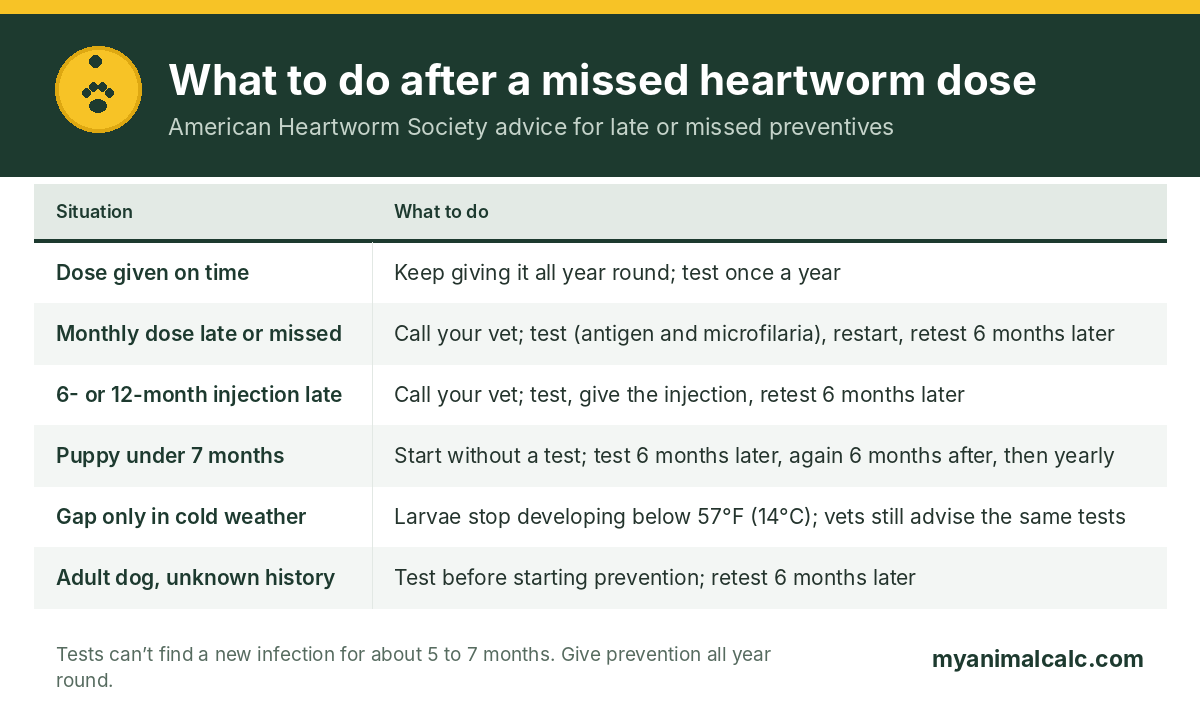
Missed heartworm dose chart
The American Heartworm Society’s advice for common situations.
| Situation | What to do |
|---|---|
| Dose given on time | Keep giving it all year round; test once a year |
| Monthly dose late or missed | Call your vet; test (antigen and microfilaria), restart, retest 6 months later |
| 6- or 12-month injection late | Call your vet; test, give the injection, retest 6 months later |
| Puppy under 7 months | Start without a test; test 6 months later, again 6 months after, then yearly |
| Gap only in cold weather | Larvae stop developing below 57°F (14°C); vets still advise the same tests |
| Adult dog, unknown history | Test before starting prevention; retest 6 months later |
Your vet decides the details for your dog. The dog heartworm risk calculator gives the dates for each step.
Why a late heartworm dose matters
Heartworm preventives kill the young larvae a dog picked up from mosquitoes since the previous dose. The American Heartworm Society notes that monthly oral and topical products are labeled for a 30-day interval, that beyond this their effect on older larvae falls off unpredictably, and that skipping or delaying just one dose can let an infection through. No preventive is 100% effective, which is why yearly testing is advised too.
What to do after a missed heartworm dose
Call your vet. For dogs over 7 months, the AHS guidelines advise an antigen and a microfilaria test before restarting or switching products, then a retest 6 months later and yearly tests after that. Puppies under 7 months can start or restart prevention without a test, then be tested 6 months later, again 6 months after that, and then every year. The dog heartworm risk calculator shows each of these dates.
Why the retest is 6 months later
A new infection can’t be found straight away: antigen shows up from about 5 months and microfilariae from about 6 months after infection, and the AHS says heartworms must be about 7 months old to be diagnosed. A test now shows any older infection; the retest catches one from the gap. Larvae stop developing in mosquitoes below 57°F (14°C), so a gap in cold weather is lower risk, but the AHS still recommends prevention all year round.
Printable missed heartworm dose chart
The chart above as an image, to save on your phone or print. Use the calculator at the top of the page for your own dog.
Check the right dose with the Heartgard dosage for dogs calculator, the Interceptor Plus dosage for dogs calculator or the Simparica Trio dosage for dogs calculator. Puppies start with the puppy deworming schedule calculator.
Dog heartworm risk calculator FAQs
What happens if my dog misses a heartworm pill?
It may not be protected against larvae picked up since the last dose. Give the next dose as your vet advises, test as they recommend and retest 6 months later.
How late can I give heartworm medicine?
There is no safe grace period in the guidelines: monthly products are labeled for a 30-day interval. Give it as soon as you can and call your vet if it was late.
Does my dog need a heartworm test after a missed dose?
Usually yes, if it is over 7 months old: a test now and a retest 6 months later, because a new infection takes months to show.
Does my dog need heartworm prevention in winter?
The American Heartworm Society and the FDA recommend giving it all year round.