| Vitamin A | 1,250 IU per 1,000 kcal; no more than 62,500 |
|---|---|
| Vitamin D | 125 IU per 1,000 kcal; no more than 750 |
| Vitamin E | 12.5 IU per 1,000 kcal |
| B vitamins and choline | Same minimum for puppies and adults |
| 30 lb pet dog | About 794 kcal a day: 992 IU of vitamin A and 99 IU of vitamin D |
How to use the dog vitamin requirements calculator
- Enter your dog’s weight in pounds or kilograms.
- Choose the life stage: adult (with activity level), puppy, or pregnant and nursing.
- Type the daily calories if you know them, for example from a recipe or your vet; otherwise the calculator estimates them.
- Read the table: the daily minimum of each vitamin, the upper limit where there is one, and the per-1,000 kcal value.
Dog vitamin requirements chart
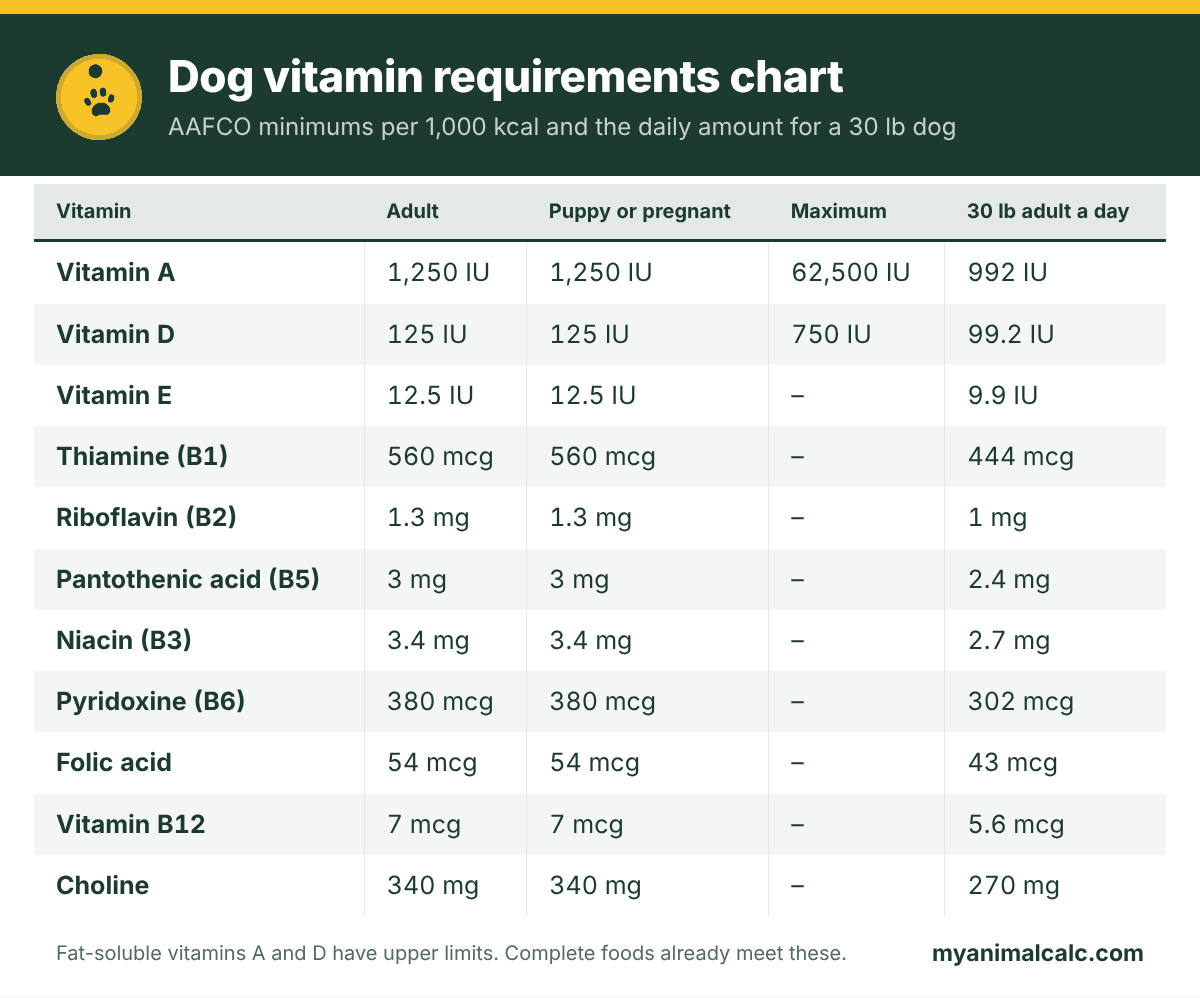
AAFCO minimums per 1,000 kcal for adults and for growth and reproduction, the AAFCO maximum, and the daily amount for a 30 lb spayed or neutered adult eating about 794 kcal.
| Vitamin | Adult | Puppy or pregnant | Maximum | 30 lb adult a day |
|---|---|---|---|---|
| Vitamin A | 1,250 IU | 1,250 IU | 62,500 IU | 992 IU |
| Vitamin D | 125 IU | 125 IU | 750 IU | 99.2 IU |
| Vitamin E | 12.5 IU | 12.5 IU | – | 9.9 IU |
| Thiamine (B1) | 560 mcg | 560 mcg | – | 444 mcg |
| Riboflavin (B2) | 1.3 mg | 1.3 mg | – | 1 mg |
| Pantothenic acid (B5) | 3 mg | 3 mg | – | 2.4 mg |
| Niacin (B3) | 3.4 mg | 3.4 mg | – | 2.7 mg |
| Pyridoxine (B6) | 380 mcg | 380 mcg | – | 302 mcg |
| Folic acid | 54 mcg | 54 mcg | – | 43 mcg |
| Vitamin B12 | 7 mcg | 7 mcg | – | 5.6 mcg |
| Choline | 340 mg | 340 mg | – | 270 mg |
AAFCO lists vitamin B12 and folic acid in mg; 0.007 mg is 7 mcg. Vitamin K and vitamin C have no AAFCO minimum: dogs make vitamin C, and gut bacteria supply vitamin K.
Why dog vitamin requirements are set per calorie
A dog eats to meet its energy needs, so a food that is balanced per calorie stays balanced whether a dog eats a cup or four cups. That is why AAFCO, and the European FEDIAF guidelines, set vitamins per 1,000 kcal rather than per pound of dog. A sedentary dog that eats less still needs the same vitamins, which is one reason weight-loss diets are made more nutrient-dense instead of just feeding less of a regular food.
Do dogs need a vitamin supplement?
Not if they eat a complete and balanced commercial food: it is formulated to meet every requirement in the table. Home-cooked and raw diets are different. Studies of published home-made recipes found most of them short of at least one vitamin or mineral, often vitamin D, vitamin E and choline. A veterinary nutritionist can balance a recipe and choose a supplement made for dogs. Don’t use human multivitamins, which are dosed for people and may contain xylitol or iron in amounts that suit a person.
Vitamin D and vitamin A toxicity
Fat-soluble vitamins build up in the body. Vitamin D poisoning is the most serious: it raises blood calcium and can damage the kidneys within days. It happens when dogs eat human vitamin D tablets, some rat poisons, or foods with a formulation error, and there have been recalls of dog foods for too much vitamin D. Too much vitamin A over months, usually from feeding a lot of liver, causes bone and joint problems. Stay under the maximum in the calculator.
Printable dog vitamin requirements chart
The chart above as an image, to save on your phone or print. Use the calculator at the top of the page for your own dog.
Pair it with the dog mineral requirements calculator and, for home-cooked food, the dog calcium to phosphorus ratio calculator. For daily calories, use the dog calorie calculator.
Dog vitamin requirements FAQs
How much vitamin D does a dog need a day?
At least 125 IU per 1,000 kcal and no more than 750 IU per 1,000 kcal. A 30 lb pet dog eating about 794 kcal needs about 99 IU a day.
How much vitamin A does a dog need?
1,250 IU per 1,000 kcal, with an AAFCO maximum of 62,500 IU per 1,000 kcal.
Do dogs need vitamin C?
Healthy dogs make their own vitamin C, so AAFCO sets no requirement.
Can I give my dog human vitamins?
It isn’t a good idea. Doses are set for people, vitamin D tablets can poison dogs, and some gummies and chewables contain xylitol.
Do puppies need more vitamins?
Per calorie, the vitamin minimums are the same for puppies and adults, but puppies eat more calories per pound, so they take in more in total.
What are the signs of vitamin deficiency in dogs?
They depend on the vitamin: poor coat and skin, weakness, poor growth or, with thiamine, nerve signs. They are rare on complete foods and more likely on unbalanced home-made diets.