| Dose | 2 mg/kg every 12 to 24 hours |
|---|---|
| When | Heart failure (ACVIM stages C and D) |
| Food | With food; it is absorbed much better |
| Tablets | 25, 50 and 100 mg |
| Potassium | Holds potassium in the body; blood tests needed |
| Prescription | Yes |
How to use the spironolactone dosage for dogs calculator
- Enter your dog’s weight from a recent weigh-in, in pounds or kilograms.
- Choose what spironolactone is for, if the calculator asks, and the strength on your label.
- Enter the dose you were told to give (optional) to check it against the usual range.
- Tick any that apply. Some answers stop the result, because a vet needs to decide.
- Read the result: the dose in mg, the amount of your product, and how often.
Spironolactone dosage for dogs chart by weight
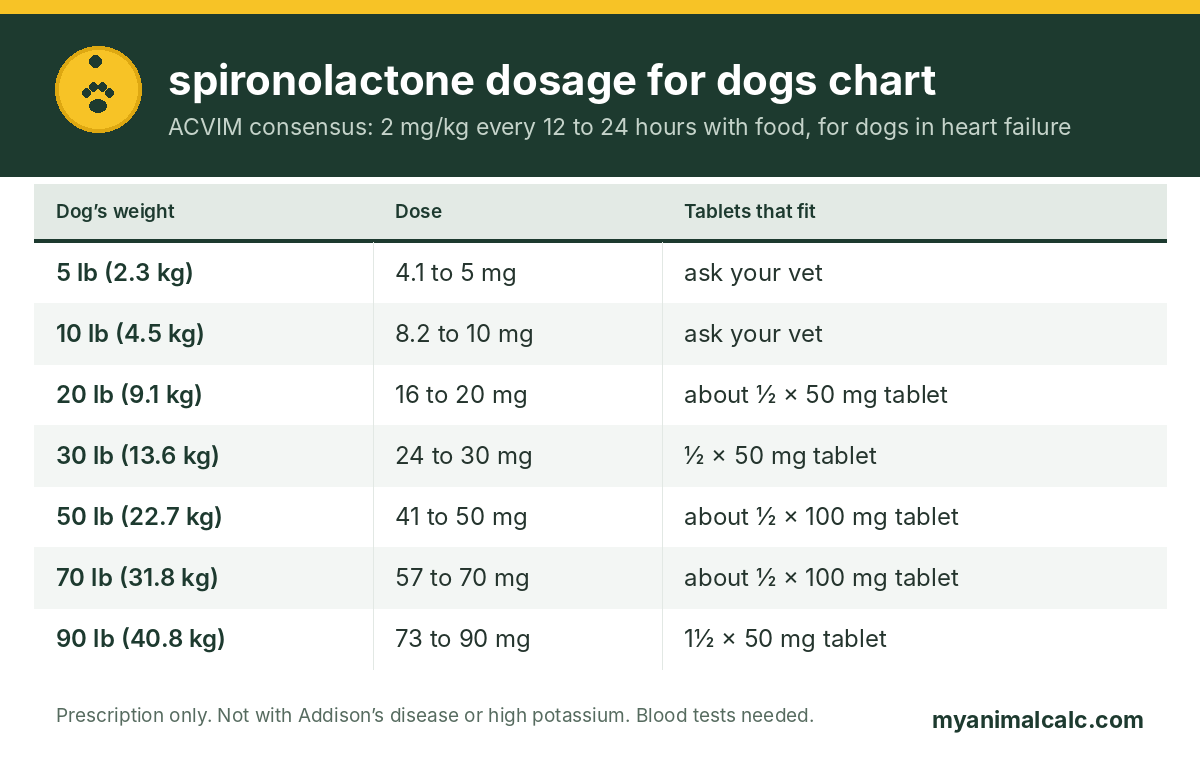
Doses at 2 mg/kg for dogs of common weights, with the tablet amount that comes closest.
| Dog’s weight | Dose | Tablets that fit |
|---|---|---|
| 5 lb (2.3 kg) | 4.1 to 5 mg | ask your vet |
| 10 lb (4.5 kg) | 8.2 to 10 mg | ask your vet |
| 20 lb (9.1 kg) | 16 to 20 mg | about ½ × 50 mg tablet |
| 30 lb (13.6 kg) | 24 to 30 mg | ½ × 50 mg tablet |
| 50 lb (22.7 kg) | 41 to 50 mg | about ½ × 100 mg tablet |
| 70 lb (31.8 kg) | 57 to 70 mg | about ½ × 100 mg tablet |
| 90 lb (40.8 kg) | 73 to 90 mg | 1½ × 50 mg tablet |
Your vet decides whether to give it once or twice a day. Small dogs may need a compounded strength.
Why spironolactone is used in dogs with heart failure
When the heart fails, the body releases aldosterone, which holds salt and water and, over time, stiffens the heart and blood vessels. Spironolactone blocks it. In a European trial of dogs with mitral valve disease, adding spironolactone to standard treatment lowered the risk of heart-related death or worsening, and the 2019 ACVIM consensus recommends it for dogs in heart failure.
How to give spironolactone
Give it with food: absorption is much higher after a meal. Give it at the same times each day, together with the other heart medicines. Your vet will check kidney values and electrolytes, especially potassium, after starting it and after dose changes. A combination tablet with benazepril (Cardalis) exists, which reduces the number of pills.
Spironolactone side effects and warnings
Most dogs tolerate it well; vomiting, diarrhea and poor appetite can occur. It shouldn’t be used in dogs with Addison’s disease, high potassium or low sodium. Combining it with an NSAID in a dog with kidney disease is risky, and potassium supplements may need to stop. Keep counting your dog’s sleeping breathing rate at home; a rise is an early sign of fluid.
If your dog ate extra tablets, call your vet or an animal poison line: ASPCA (888) 426-4435 or Pet Poison Helpline (855) 764-7661 (a fee may apply).
Printable spironolactone dosage for dogs chart
The chart above as an image, to save on your phone or print. Use the calculator at the top of the page for your own dog.
Other heart medicines: the Vetmedin dosage for dogs calculator, the furosemide dosage for dogs calculator, the benazepril dosage for dogs calculator and the torsemide dosage for dogs calculator. Track breathing with the dog breathing rate calculator.
Spironolactone dosage for dogs FAQs
What is the spironolactone dose for dogs?
2 mg per kg every 12 to 24 hours, according to the ACVIM consensus for dogs with heart failure.
How much spironolactone for a 20 lb dog?
A 20 lb (9.1 kg) dog at 2 mg/kg needs about 18 mg per dose; your vet may prescribe a compounded strength or a part tablet.
Should spironolactone be given with food?
Yes. Dogs absorb it much better when it is given with a meal.
Does spironolactone make dogs urinate a lot?
It is a mild diuretic, so it adds a little to the effect of furosemide, but it mainly works by blocking aldosterone.