| Earliest sign | Tacky, sticky gums |
|---|---|
| Skin tent | Skin slow to flatten from about 6% |
| Needs a vet | Dry gums, slow skin, sunken eyes, or ongoing vomiting or diarrhea |
| Fluid lost | Weight in kg × % dehydration × 10 = mL |
| Example | A 30 lb dog at 8%: about 1,089 mL |
How to use the dog dehydration calculator
- Enter your dog’s weight.
- Check the gums with a clean finger, then lift the skin between the shoulder blades and let go.
- Look at the eyes, press a pink part of the gum to see how fast the color comes back, and note how alert your dog is.
- Read the estimate: the percentage, the fluid lost and whether to watch, call or go to a vet.
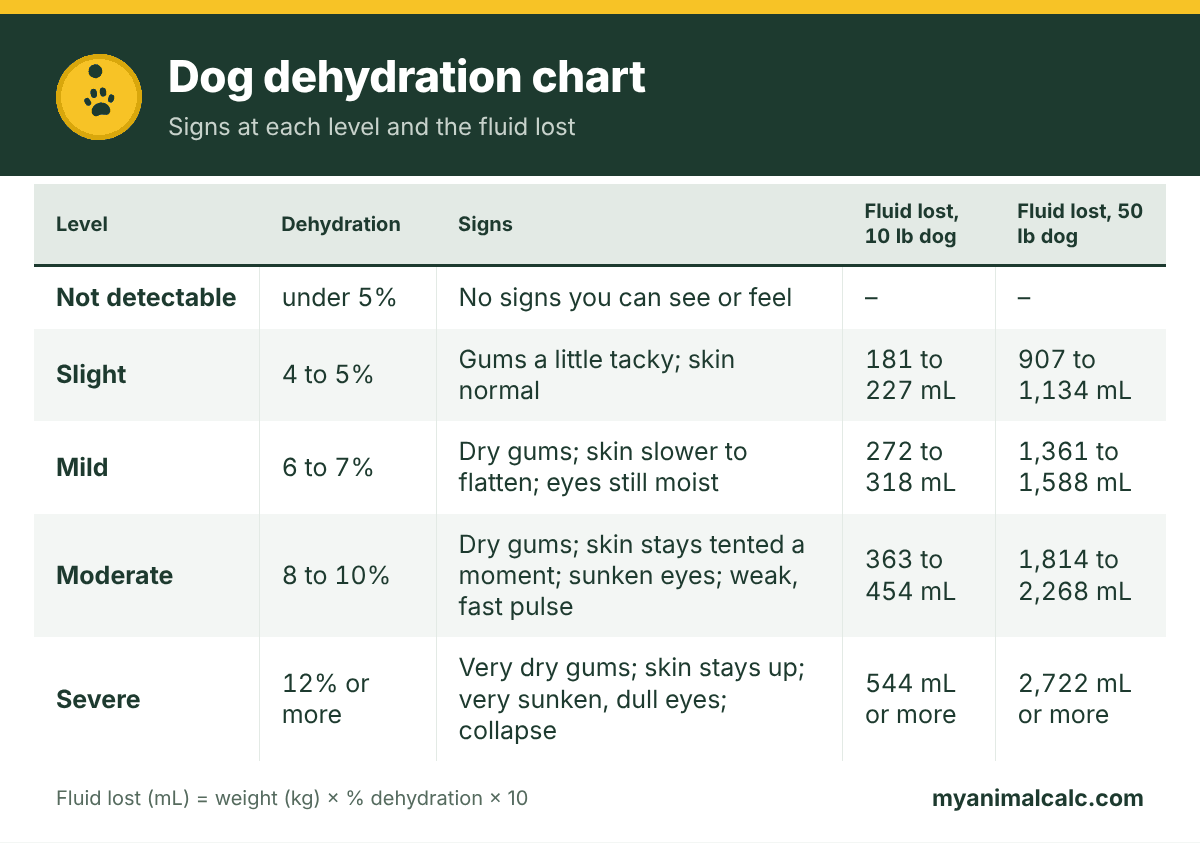
Dog dehydration chart
Signs at each level of dehydration and the fluid a 10 lb and a 50 lb dog have lost.
| Level | Dehydration | Signs | Fluid lost, 10 lb dog | Fluid lost, 50 lb dog |
|---|---|---|---|---|
| Not detectable | under 5% | No signs you can see or feel | – | – |
| Slight | 4 to 5% | Gums a little tacky; skin normal | 181 to 227 mL | 907 to 1,134 mL |
| Mild | 6 to 7% | Dry gums; skin slower to flatten; eyes still moist | 272 to 318 mL | 1,361 to 1,588 mL |
| Moderate | 8 to 10% | Dry gums; skin stays tented a moment; sunken eyes; weak, fast pulse | 363 to 454 mL | 1,814 to 2,268 mL |
| Severe | 12% or more | Very dry gums; skin stays up; very sunken, dull eyes; collapse | 544 mL or more | 2,722 mL or more |
The signs overlap, so the calculator uses the most severe one you pick. A vet confirms the figure with an exam and blood tests.
How to do the skin tent test
Gently pinch and lift the loose skin over the shoulder blades, then let go. In a well-hydrated dog it snaps straight back. As a dog dries out, the skin flattens more slowly, and in severe dehydration it stays up in a ridge. The test is less reliable in some dogs: old and thin dogs have looser skin that goes back slowly anyway, overweight dogs can look normal when they are not, and puppies have very elastic skin. Use it together with the gums and eyes.
Checking the gums and capillary refill
Healthy gums are pink, wet and slippery. Tacky or sticky gums are an early sign of dehydration, and dry gums a later one. A dog that is nauseous may drool, so its gums can feel wet even when it is dehydrated. For the capillary refill test, press a pink part of the gum with your finger until it goes pale, let go and count: color should return in under 2 seconds. Slow refill can mean dehydration or poor circulation.
How much fluid has your dog lost
Vets work out the fluid deficit as body weight in kg × the percentage of dehydration, so a 12 kg dog that is 8% dehydrated has lost about 960 mL. That loss is replaced over several hours, on top of the water the dog needs each day, usually with fluids under the skin or into a vein. At home you can only offer water: small amounts often, especially if your dog is vomiting. Don’t force water into a dog’s mouth with a syringe. For daily needs, see the dog water intake calculator.
Common causes of dog dehydration
Vomiting and diarrhea are the most common causes, then heat and exercise, not drinking because of illness or pain, and diseases that make a dog pee more, such as kidney disease and diabetes. Puppies, toy breeds and seniors dehydrate fastest. If your dog has been in the heat, check for overheating with the dog heatstroke risk calculator; if it is vomiting, see the dog vomiting calculator.
Printable dog dehydration chart
The chart above as an image, to save on your phone or print for the fridge. Use the calculator at the top of the page for your own dog.
If your dog has diarrhea, check the dog poop color calculator; after a hot day, take its temperature with the dog temperature calculator.
Dog dehydration FAQs
How can I tell if my dog is dehydrated?
Check for tacky or dry gums, skin that is slow to flatten after you lift it between the shoulder blades, sunken eyes and tiredness. Mild dehydration of under 5% has no visible signs.
What are the signs of severe dehydration in dogs?
Very dry gums, skin that stays up when lifted, very sunken and dull eyes, a weak and fast pulse, and weakness or collapse. This is 10% or more and needs a vet now.
How do I rehydrate my dog at home?
For mild cases, offer small amounts of water often. A dog that is vomiting, has diarrhea that goes on or shows dry gums or slow skin needs a vet, who can give fluids under the skin or into a vein.
Can I give my dog electrolyte drinks?
Ask your vet. Unflavored pet or pediatric electrolyte solutions can help some dogs, but sports drinks are high in sugar, and sugar-free products can contain xylitol, which is poisonous to dogs.
How much fluid does a dehydrated dog need?
Its fluid loss plus its normal daily needs. The loss is weight in kg × % dehydration × 10 mL: a 30 lb (13.6 kg) dog at 8% has lost about 1,089 mL.
Why does the skin test look slow in my old dog?
Older and thinner dogs have less elastic skin, so the skin tent goes back slowly even when they are well hydrated. Look at the gums and eyes too.