| Normal | 101 to 102.5°F (38.3 to 39.2°C) |
|---|---|
| Fever | 103°F (39.4°C) or higher |
| Emergency | Above 104°F (40°C) or below 99°F (37.2°C) |
| Organ damage | Can start at 106°F (41.1°C) |
| Best method | A digital rectal thermometer with lubricant |
How to use the dog temperature calculator
- Take the temperature with a digital thermometer (see the steps below), ideally when your dog is calm.
- Enter the reading and choose °F or °C.
- Choose how you measured and tick anything that could affect it, such as exercise, heat or vaccines.
- Read the result: the band your dog is in, what it means and how urgent it is.
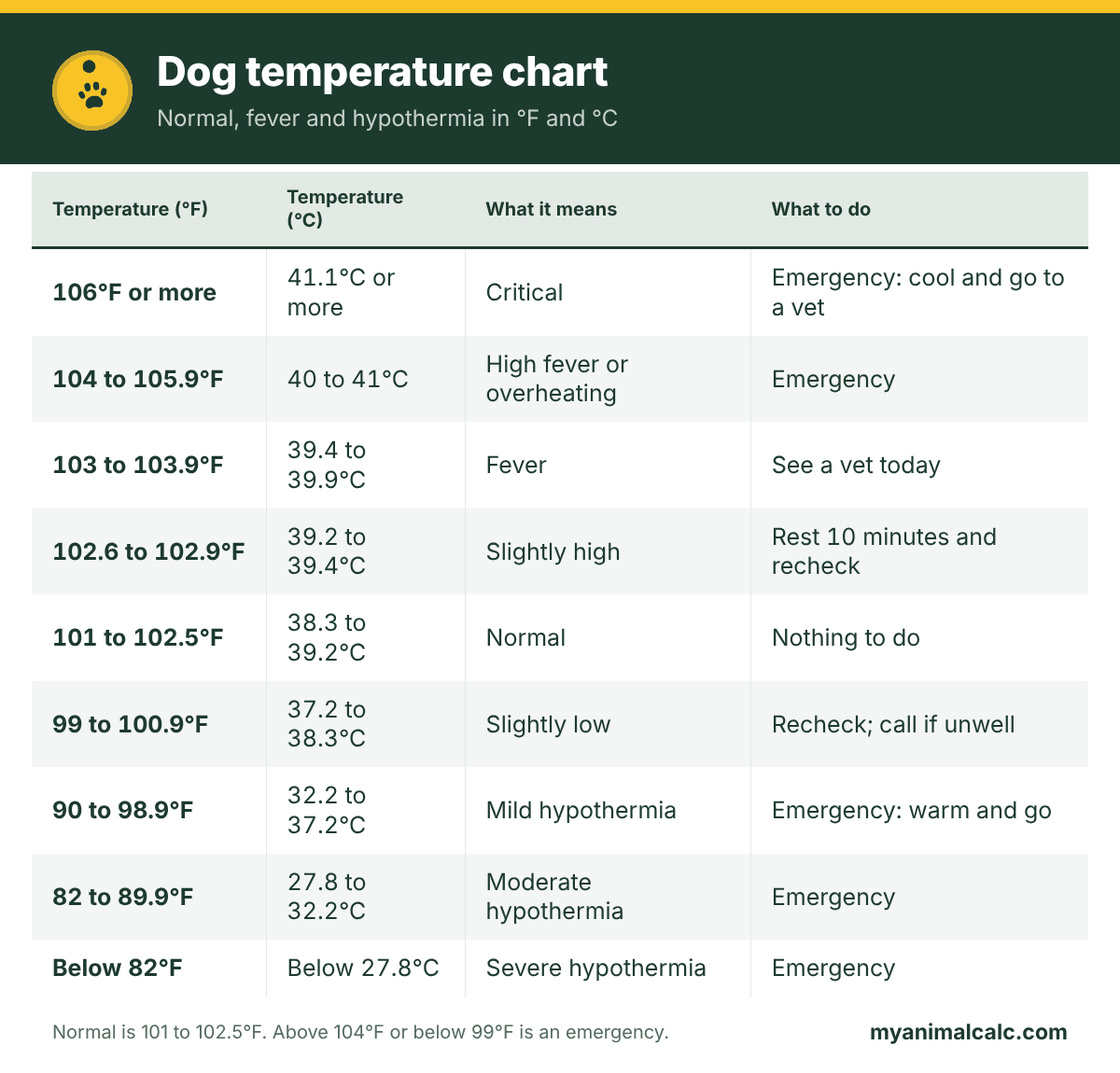
Dog temperature chart
Rectal temperatures for adult dogs, in °F and °C, with what each range means.
| Temperature (°F) | Temperature (°C) | What it means | What to do |
|---|---|---|---|
| 106°F or more | 41.1°C or more | Critical | Emergency: cool and go to a vet |
| 104 to 105.9°F | 40 to 41°C | High fever or overheating | Emergency |
| 103 to 103.9°F | 39.4 to 39.9°C | Fever | See a vet today |
| 102.6 to 102.9°F | 39.2 to 39.4°C | Slightly high | Rest 10 minutes and recheck |
| 101 to 102.5°F | 38.3 to 39.2°C | Normal | Nothing to do |
| 99 to 100.9°F | 37.2 to 38.3°C | Slightly low | Recheck; call if unwell |
| 90 to 98.9°F | 32.2 to 37.2°C | Mild hypothermia | Emergency: warm and go |
| 82 to 89.9°F | 27.8 to 32.2°C | Moderate hypothermia | Emergency |
| Below 82°F | Below 27.8°C | Severe hypothermia | Emergency |
Excitement and struggling can add half a degree or more, so recheck a slightly high reading after your dog has rested quietly for about 10 minutes.
How to take a dog temperature
Use a digital thermometer kept just for your dog, and ask someone to hold it gently. Put a little petroleum jelly or water-based lubricant on the tip, lift the tail and slide the thermometer about 1 inch (2.5 cm) into the rectum, less in small dogs. Hold it until it beeps, then read it, wipe it and clean it with alcohol. Pet ear thermometers are easier but less reliable, especially with wax or an ear infection. Feeling the nose tells you nothing.
What a high dog temperature means
A fever is the body fighting infection or inflammation, and it needs a vet visit to find the cause. Overheating is different: the dog takes in more heat than it can lose, after exercise, hot weather or a hot car. Both can reach dangerous levels, and above 106°F organs can be damaged. If your dog has been in the heat, cool it with cool water before you set off for the vet; see the dog heatstroke risk calculator. Never give human fever medicines such as ibuprofen or acetaminophen: they can poison dogs.
What a low dog temperature means
Below 99°F is hypothermia. It is graded mild (90 to 99°F), moderate (82 to 90°F) and severe (below 82°F). Small, thin, old and wet dogs lose heat fastest, and illness, shock and anesthesia can cause it even indoors. Wrap your dog in a dry blanket, add warm (not hot) water bottles wrapped in a towel, and take it to a vet. Newborn puppies are an exception: their normal temperature is lower for the first weeks of life.
Fahrenheit to Celsius for dog temperatures
The common readings converted. To convert yourself, subtract 32 from °F and multiply by 5/9.
| Fahrenheit | Celsius |
|---|---|
| 99°F | 37.2°C |
| 100°F | 37.8°C |
| 101°F | 38.3°C |
| 101.5°F | 38.6°C |
| 102°F | 38.9°C |
| 102.5°F | 39.2°C |
| 103°F | 39.4°C |
| 104°F | 40°C |
| 105°F | 40.6°C |
| 106°F | 41.1°C |
Printable dog temperature chart
The chart above as an image, to save on your phone or print for the fridge. Use the calculator at the top of the page for your own dog.
If your dog has a temperature and is breathing fast, check the dog breathing rate calculator; after vomiting or diarrhea, check for fluid loss with the dog dehydration calculator.
Dog temperature FAQs
What is a normal dog temperature?
101 to 102.5°F (38.3 to 39.2°C), taken rectally. Small dogs often sit near the top of the range and large dogs near the bottom.
What temperature is a fever in a dog?
103°F (39.4°C) or higher. A fever needs a vet visit the same day, and above 104°F (40°C) it is an emergency.
Can I take my dog’s temperature without a thermometer?
Not reliably. A warm, dry nose or warm ears don’t mean a fever. Use a digital rectal thermometer, which is cheap and quick.
What is a dangerously low temperature for a dog?
Below 99°F (37.2°C). Warm your dog gently with blankets and see a vet; below 90°F (32.2°C) is moderate to severe hypothermia.
Is 102.8 a fever in a dog?
Not quite. It is just above the normal range and often caused by excitement or exercise. Let your dog rest for 10 minutes and measure again; call your vet if it reaches 103°F or your dog seems unwell.
Can I give my dog Tylenol or ibuprofen for a fever?
No. Acetaminophen and ibuprofen can poison dogs, even at small doses. Call your vet, who can give a dog-safe treatment once the cause is known.
Sources
- Merck Veterinary Manual: Normal physiological values for dogs
- VCA Animal Hospitals: Taking your pet’s temperature
- American Kennel Club: Fever in dogs, signs, symptoms and treatment
- Brodeur et al. (2017), Journal of Veterinary Emergency and Critical Care: Hypothermia and targeted temperature management in cats and dogs