| Normal resting range | 60 to 120 beats a minute (adult dogs) |
|---|---|
| Reference table | 70 to 120 beats a minute |
| Puppies | Faster than adults |
| Where to count | Left chest behind the elbow, or the pulse inside the thigh |
| Quick count | Beats in 15 seconds × 4 |
| Emergency | Collapse, pale or blue gums, or trouble breathing |
How to use the dog heart rate calculator
- Let your dog rest for at least 10 minutes, lying down or asleep.
- Count the beats with your hand on the left chest just behind the elbow, or the pulse on the inside of the back thigh, for 15, 30 or 60 seconds.
- Enter the count and the time, and whether your dog was resting.
- Read the beats per minute and whether it is in the normal range.
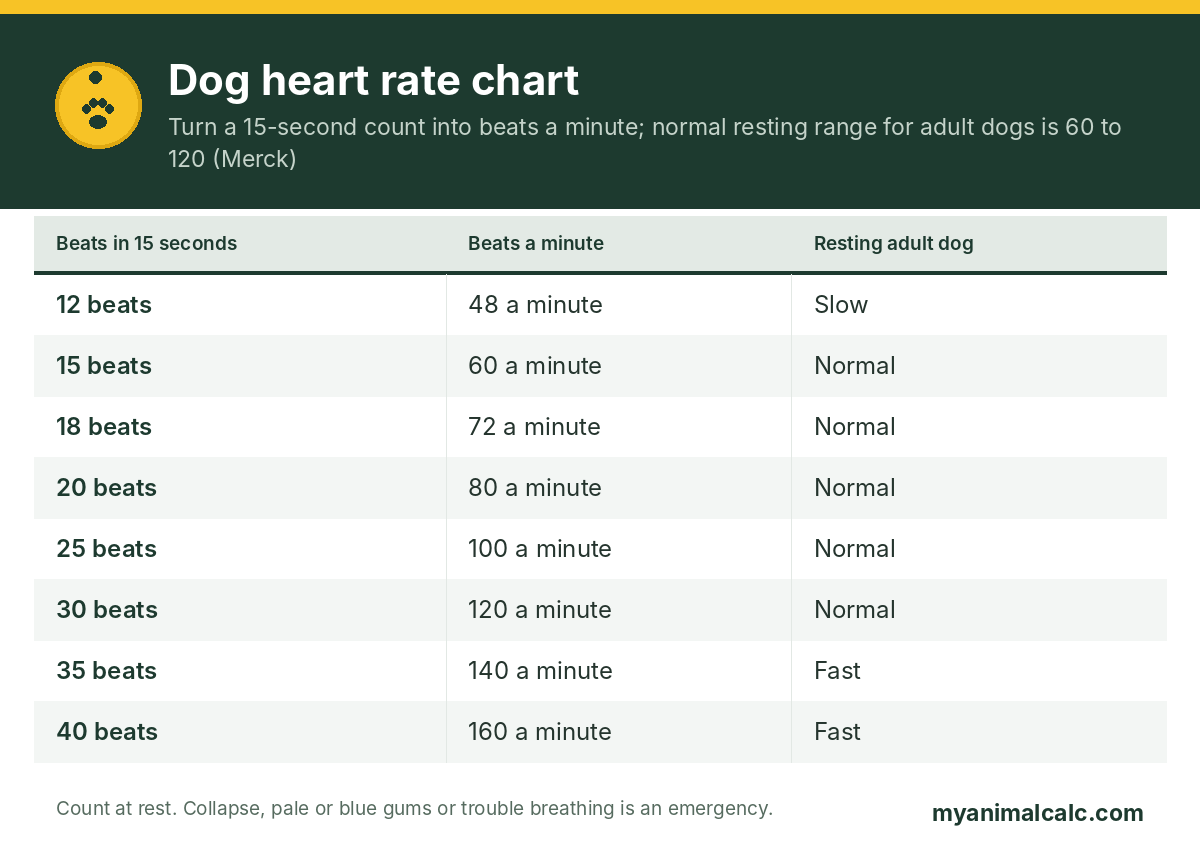
Dog heart rate chart (15-second count)
Turn a 15-second count into beats a minute, and see where it falls against the normal resting range for adult dogs.
| Beats in 15 seconds | Beats a minute | Resting adult dog |
|---|---|---|
| 12 beats | 48 a minute | Slow |
| 15 beats | 60 a minute | Normal |
| 18 beats | 72 a minute | Normal |
| 20 beats | 80 a minute | Normal |
| 25 beats | 100 a minute | Normal |
| 30 beats | 120 a minute | Normal |
| 35 beats | 140 a minute | Fast |
| 40 beats | 160 a minute | Fast |
Count again if the result is outside the range; a calm, resting count is the one that matters.
How to check your dog’s heart rate
With your dog lying on its right side or standing, place your palm on the left side of the chest just behind the elbow and feel the beat. Or press two fingers into the groove on the inside of the back thigh, near the top, to find the femoral pulse. Count for 15 seconds and multiply by 4, or for 30 seconds and multiply by 2. Counting for a full minute is the most accurate.
What changes a dog’s heart rate
Exercise, excitement, fear, pain, fever, heat and some medicines raise the heart rate; sleep, fitness and some medicines lower it. Small dogs tend to sit higher in the range and large or athletic dogs lower, but in one study of healthy dogs body weight predicted heart rate poorly, so your own dog’s usual resting rate is the best comparison. The rate normally rises and falls with breathing.
When to call the vet
Call your vet if the resting rate stays above 120 or below 60 after a second calm count, or if your dog is weak, coughing, breathing fast or seems unwell. Go to an emergency vet now for collapse or fainting, pale, grey or blue gums, or labored breathing. A very fast, irregular beat or long pauses should always be checked.
Printable dog heart rate chart
The chart above as an image, to save on your phone or print. Use the calculator at the top of the page for your own dog.
Check breathing with the dog breathing rate calculator, temperature with the dog temperature calculator and blood pressure with the dog blood pressure calculator.
Dog heart rate FAQs
What is a normal heart rate for a dog?
Usually 60 to 120 beats a minute at rest for adult dogs, according to the Merck Veterinary Manual. Puppies run faster.
Is it normal for a dog’s heartbeat to be irregular?
A beat that speeds up as the dog breathes in and slows as it breathes out is normal in dogs. Random skipped beats or a racing irregular beat should be checked by a vet.
Do small dogs have faster heart rates?
They tend to sit higher in the range, but body size is a poor guide. Count your own dog at rest a few times to learn its usual rate.
What heart rate is too high for a resting dog?
Above 120 beats a minute at rest is outside the usual range. Recount after 10 calm minutes, and call your vet if it stays high or your dog seems unwell.